

It is an acquired pigmentation disorder that results in the appearance of white patches on the surface of the skin or mucous membranes at any point during a person’s life. It is caused by the progressive destruction or inactivation of melanocytes located deep in the epidermis, which are responsible for the coloration of the superficial skin cells.

Symptoms
The main indication of vitiligo is the loss of pigmentation, which produces light-colored or white spots/patches on the skin. Usually, the depigmentation is first noticed in areas exposed to the sun, such as the hands, feet, arms, face, and lips. The initial stage of vitiligo is typically characterized by a single patch, often on the abdominal area, and in some cases, it may present with itching or excessive sweating. Often, vitiligo… It can also appear on the hair and body hair.
The appearance of vitiligo is often associated with the presence of other conditions, such as thyroid disorders (hyperthyroidism, hypothyroidism, or Hashimoto’s thyroiditis), as well as rheumatoid arthritis or alopecia areata.
The changes in appearance caused by vitiligo can affect a person’s emotional and psychological well-being and may create challenges in their professional and social life. Individuals with vitiligo may experience emotional stress, especially if the vitiligo develops in visible areas of the body, such as the face, hands, feet, or genital region. Teenagers, who are particularly concerned about their appearance, can be emotionally affected by extensive vitiligo. Some people with vitiligo may feel embarrassment, shame, depression, or worry about how others react when they see them.
Therapy
Vitiligo is classified as localized, segmental, or generalized. Its diagnosis is usually made clinically. A biopsy may be necessary in cases requiring differential diagnosis from other conditions that cause hypopigmentation, such as post-inflammatory hypopigmentation, spongiotic mycosis, and pityriasis versicolor. Often, people who develop vitiligo are unaware of its significance and do not know how it can be treated. Management of vitiligo should be individualized according to the patient, taking into account the benefit of treatment relative to the potential side effects of each option. The results of currently available treatments vary and cannot guarantee complete repigmentation of the affected area.
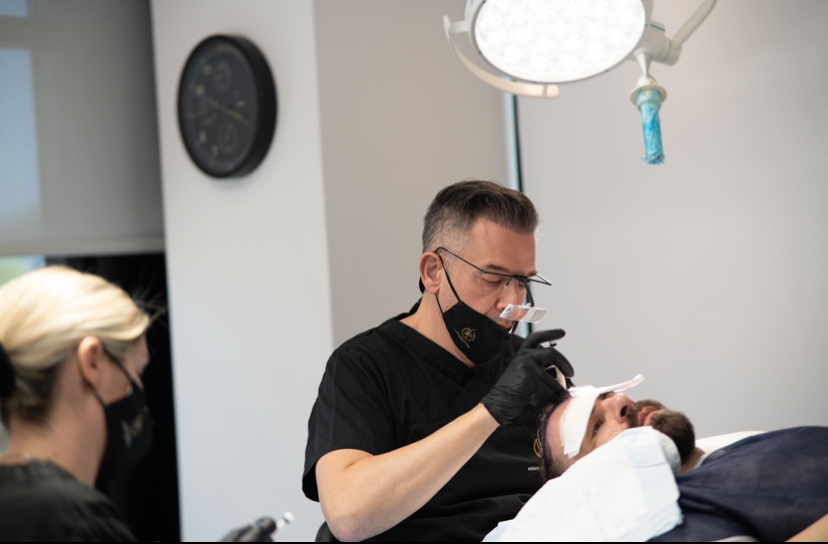
At LP Clinic, an innovative treatment is applied involving the transplantation of healthy skin, small in size from 1 mm to 1.5 mm, to the areas affected by vitiligo to restore melanocytes. This treatment can be effective for 90 to 95% of patients.
Common Questions
Can the method of healthy skin transplantation be performed on all types of vitiligo?
It is applied to localized lesions and provided that the disease has stabilized and does not spread for at least 6 months. An appointment with our Dermatologist should be made beforehand, for a complete clinical examination and history.
Is vitiligo contagious?
Vitiligo is not an infectious or contagious disease, therefore it is not transmitted through physical contact or bodily fluids from the affected person to other healthy individuals.
Is vitiligo hereditary?
While there is a greater chance that a child will develop vitiligo if the gene responsible for its appearance is present in the family history, vitiligo is not considered a hereditary disease.
Is it possible for vitiligo not to spread?
For the protection and prevention of the spread of white patches, it is considered essential to avoid injuries, in order to prevent the appearance of new lesions, as well as to use sunscreen systematically—both to protect the white areas due to the lack of melanin, and to protect the surrounding normal skin from burns, on the basis of which new vitiligo lesions may develop.