

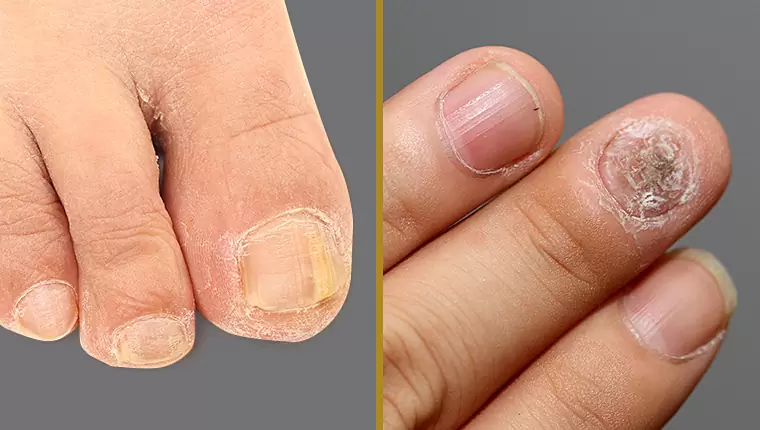
Onychomycosis is a contagious dermatological infection that occurs in both men and women, where either the fingernails or toenails are infected by fungi.
Onychomycosis can cause difficulties in daily life such as: pain, irritated skin and, in an aggravated stage, even nail detachment, symptoms that make walking, sports and manual work problematic.
Onychomycosis is caused by three categories of organisms:
- Dermatophytes (fungi that feed on nail tissue and that infect hair, skin, and nails)
- Non-dermatophyte bacteria
- Candidiasis (Candida Albicans)
Causes of provocation
- Arterial/venous disorders
- Common injuries
- Diabetes mellitus
- Immune disorders
- Psoriasis
- Long nail length (favors the colonization of fungi and bacteria in the space under the nail)
- Excessive sweating
- Skin Fungi, Foot and Toe Deformity
- Lack of vitamins A, B1, B2
- Contact in public swimming pool/gym/beach areas with increased humidity
Therapy
If onychomycosis is diagnosed at an early stage, treatment can be done topically, with antifungal ointments. If more severe onychomycosis is detected, additional oral treatment with antifungal pills may be given.
Common Questions
Can I do anything to protect myself from onychomycosis, especially during the summer months?
Avoid places with excessive humidity or elevated temperatures, two conditions that favor fungi. Sweaty feet are treated by frequently changing shoes and socks.
Can I have my nails done by a nail technician if I have onychomycosis?
First, you need to inform the technician about the fungus. Toenails that have fungus should be trimmed with different scissors or files than the rest, to avoid transferring the fungus, and gloves should be used during the trimming process.
What else should I know about mycosis?
Some useful tips are to avoid walking barefoot in public areas that are in contact with the wet element, such as swimming pools, beaches, and gym locker rooms, and to choose comfortable footwear that does not press or injure the toes.