

They are extremely common benign skin lesions (non-cancerous), originating from the cells of the outer layer of the epidermis (keratinocytes). They are often associated with a hereditary predisposition and appear at older ages, over 40 years.
Symptoms
Seborrheic hyperkeratosis usually does not cause symptoms, but it can be uncomfortable. The patient may experience itching in these areas and they may rub or catch on clothing, resulting in irritation.
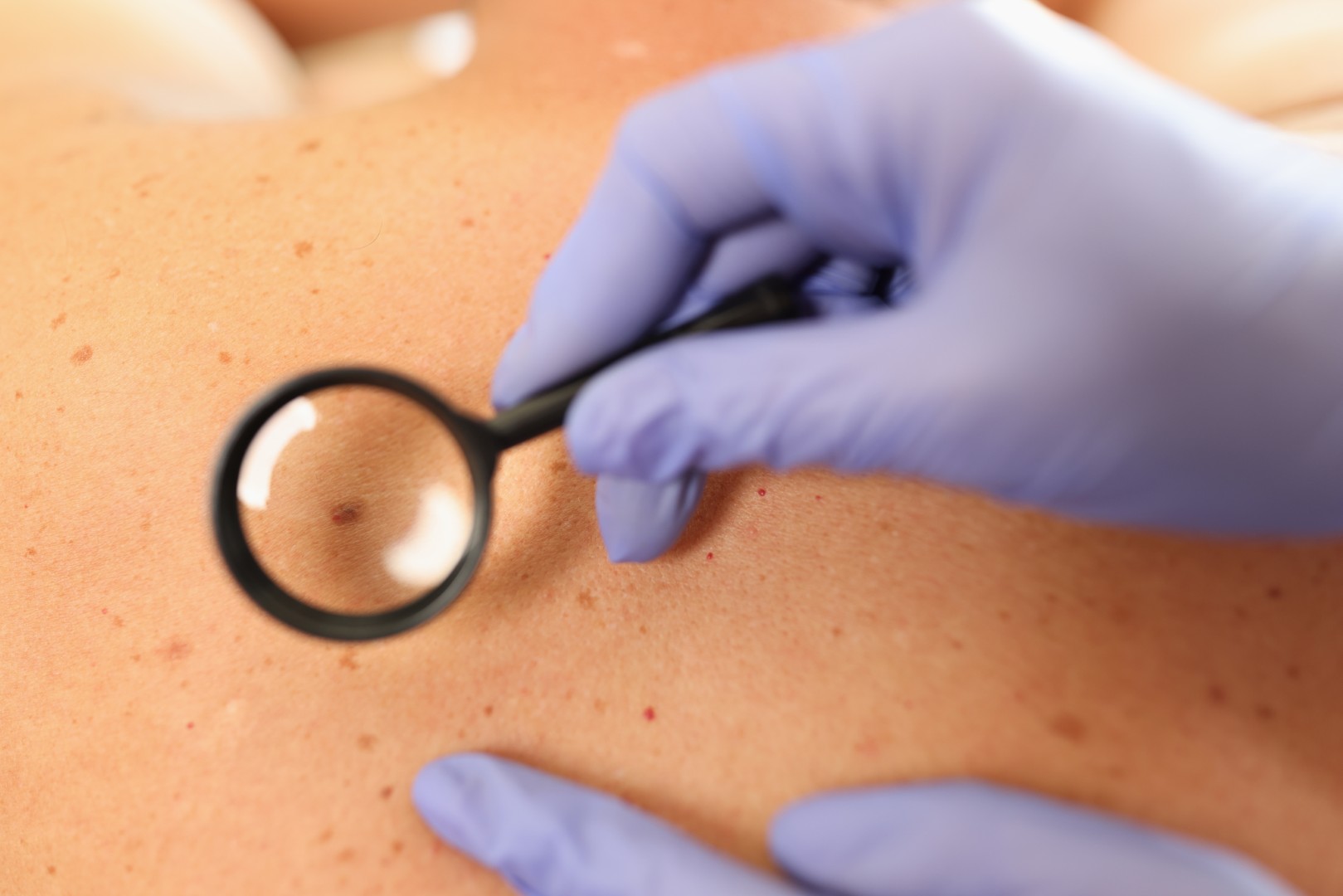
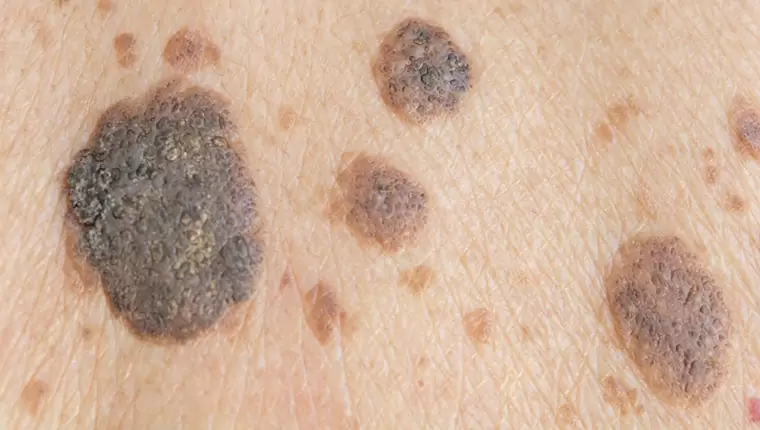
They form on the chest, back, abdomen, scalp, face, neck, or other parts of the body. Seborrheic keratoses are circular or oval in shape, brown or black in color, and can reach up to two centimeters in diameter. They are usually slightly raised with a characteristic “stuck-on” appearance and a pitted surface.
Therapy
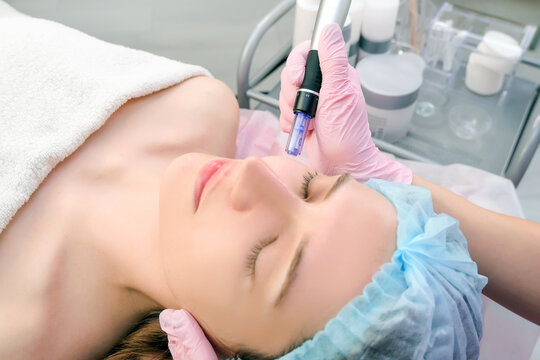
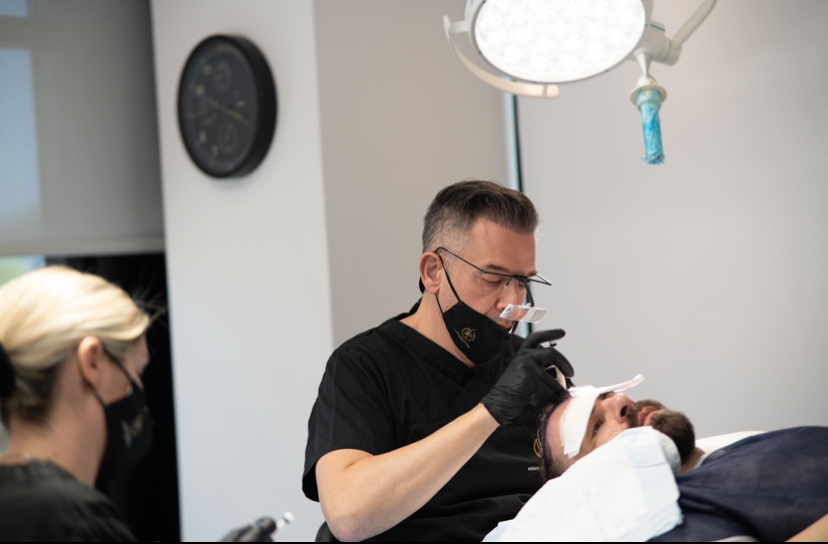
The removal of seborrheic keratoses is primarily an aesthetic matter rather than a pathological one. Clinical examination and diagnosis should always be performed by a dermatologist, who will recommend the most appropriate treatment depending on the case. If necessary, the dermatologist may perform digital dermoscopy or even a biopsy. Treatment can be carried out with cryotherapy, electrocautery, surgical excision, curettage, or laser.
Common Questions
Is seborrheic hyperkeratosis related to skin cancer?
Seborrheic hyperkeratosis is an innocent skin lesion and is not related to cancer. However, skin cancers often resemble seborrheic hyperkeratosis, so it is important to have the examination and diagnosis done by a dermatologist.
If they are removed, can seborrheic hyperkeratosis come back?
Usually not in the same spot, but over time, lesions may form in other areas of the face or torso.